CNC Machining vs. 3D Printing: Which Is Right for Your Next Project?

CNC Machining vs. 3D Printing: Which Is Right for Your Next Project?

CNC Machining vs. 3D Printing: Which Is Right for Your Next Project?

Imagine, you are at a manufacturing crossroads where a project deadline is approaching fast. You can choose CNC machining, a highly precise power, and the other one is 3D printing, a creative and adaptable technique. With both technologies, your design is going to be realised; still, the question arises which one is the best for your exact requirement? This is the dilemma that many engineers, product developers, and manufacturers not long ago faced and still encounter, every day, as they traverse the ever-changing world of modern manufacturing technology. 

Grasping the basic differences between CNC and 3D printing is not merely a choice of two machines. It is to match your project’s needs with the appropriate production process in order to cut down costs, and improve quality, speed, and functionality. Let’s see how these two manufacturing titans compare and help you decide wisely for your next project. 

Understanding the Core Technologies 

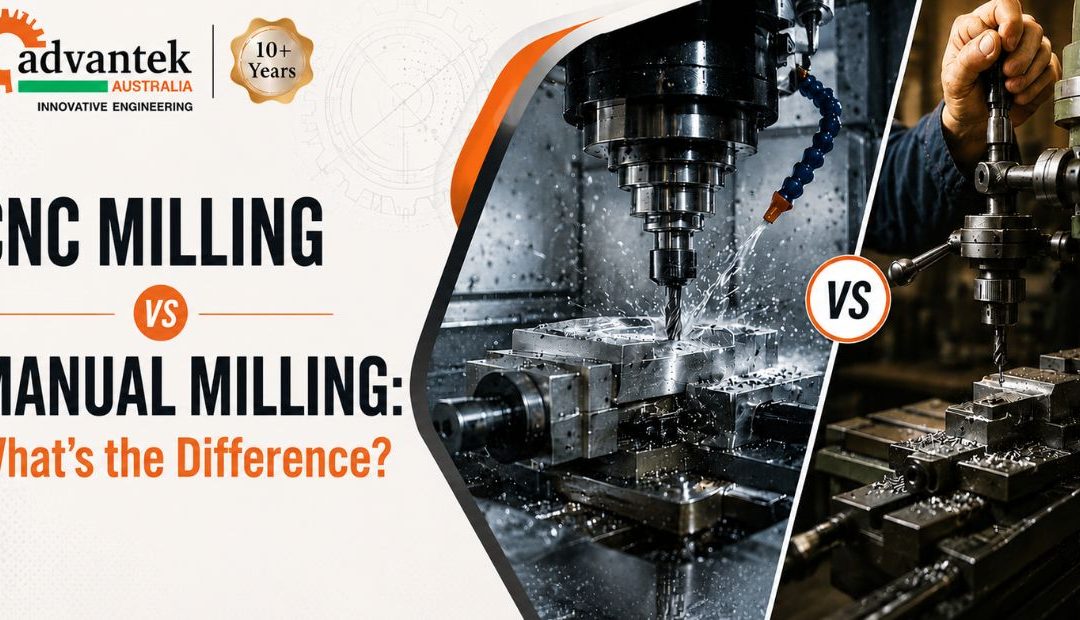
CNC machining is a subtractive manufacturing process whereby the computer precisely controls the cutting tools that take away material from a solid block to form the desired part. The cutting method is very reliable and brings very high accuracy. It can be done with metals, plastics, and composites, and thus it is possible to make very small and very smooth parts. CNC machining has been the very backbone of all manufacturing industries for many years. It has given consistent quality results no matter if the industry was aerospace or medical devices. 

On the other hand, 3D printing is using the additive manufacturing technology of building parts layer by layer from the materials like plastic filaments, resins or metal powders. This has changed the way things are done in prototyping and small production by allowing the making of even the most complex forms of the product, which would not be possible or extremely expensive with the traditional methods. Being able to manufacture intricate internal structures and organic shapes makes 3D printing a very good choice for projects that focus on innovation. 

Material Considerations and Strength Requirements 

Material selection is usually the key issue when you are considering CNC or 3D printing for your project. CNC machining has the advantage of offering a very large variety of engineering-grade materials such as aluminium, stainless steel, titanium, brass, and high-performance plastics. The parts made from solid blocks have their material’s original structural integrity, which makes them suitable for high-stress applications where sturdiness and metal properties are both a must and a no-negotiation point. 

3D printing cannot be compared with CNC machining in terms of material selection. However, it still continues to expand its material portfolio. Metal 3D printing has come a long way, but the process of building up the part layer by layer can lead to the development of anisotropic characteristics, where the strength of the part varies depending on the angle of the force applied. For functional prototypes and parts that are not subject to very high stress, modern 3D printing materials are very good. Nonetheless, those parts that are vital for the mission such as the ones needing a certain level of mechanical properties in all directions will still obtain advantages from CNC machining solutions. 

Precision, Tolerances, and Surface Finish 

The precision standards set for the products can noticeably limit the selection of manufacturing technologies. In usual CNC machining practice, it is possible to get tolerances of ±0.025mm or lower, while the quality of the surface finishes is such that in most cases no post-processing is needed. This great level of accuracy makes CNC the primary choice for precision-fit parts such as those used in mechanical assembly, tooling, and critical dimension components. 

The 3D printing technology has undergone a great transformation, and now some of the top-end systems are nearly as precise as CNC. Nevertheless, most 3D printing methods create layer lines that are detectable and the surfaces that require post-processing to achieve smoothness. If your project is such that it cannot compromise on tight tolerances and excellent surface finish straight from the machine, then, CNC machining is always the method that gives superior results with less extra work. 

Volume, Speed, and Economic Considerations 

The production volume has a huge impact on the financial aspects of the project. For prototypes that are created only once or for small batches of less than 50 units, 3D printing is the option that usually provides faster and cheaper solutions because it does not involve tooling or extensive setup. The process can go from digital design to a physical part in a few hours, thus, 3D printing is the way to go for rapid iteration and design validation. 

CNC machining is the exact opposite to 3D printing: it brings about setup time and tool path programming, but when it is all done, you get the parts with great accuracy, constancy, and quickness. The cost of CNC machining drops to a pretty low level during the process of making medium to high-volume production runs. The lowering of the cost per part is a very noticeable effect when there is an increase in the number of parts, coupled with the assurance of the process’s reliability that gives quality uniformly across thousands of units. 

Design Complexity and Geometric Freedom 

3D printing is the technology that stands out when it comes to complicated designs. It is possible to create internal channels, organic shapes, lattice structures, and topology-optimised designs without the geometric limitations that cutting tool access imposes. The designers’ challenge is to find the best way to combine performance and manufacturability; hence, they can reduce weight and material consumption while keeping the component strong. 

On the other hand, CNC machining will not let the designer’s creativity go wild, as it does not accept internal features and undercuts that the cutting tool cannot reach. Yet, with multi-axis CNC machines, the possibilities of geometry are greatly extended, and a skilled machinist can still produce intricate parts largely because of the smart fixture and optimal part orientation. For precise external features, CNC often beats 3D printing in terms of quality. 

Making Your Decision 

The decision of whether to go for CNC or 3D printing comes down to the unique needs of your project. When superior material characteristics, very close tolerances, perfect surface finish, or medium to high production numbers are the criteria, then CNC machining is the technology to be considered. It is the best option for functional end-use parts and tooling applications where trustworthiness is the main concern. 

On the other hand, when the needs of the project are the opposite, then 3D printing is the right choice. This is the case for rapid prototyping, complex designs that take advantage of the freedom of design, low-volume production, or when fast-turnaround is required for design iteration. The technology particularly suits projects where weight reduction through internal structures provides significant advantages.
 

Conclusion 

CNC machining and 3D printing are both considered to be top-notch manufacturing technologies, but each has its own merits that can be considered in different situations. The best choice will be made depending on the precedence given to the material needs, precision standards, production quantity, complexity, and time in your project. Many of the manufacturers that have had great success have been the ones that have been using these two technologies in a smart way, that is, they have been using 3D printing for creating prototypes and validating designs before going to CNC machining for large-scale production runs.  

Are you ready to use the right manufacturing method to turn your next project into a reality? The knowledgeable personnel at Advantek Australia, who are well-versed in both CNC machining and state-of-the-art manufacturing technologies, will aid you in picking the right solution tailored to your needs. No matter if you need precision components or new production methods, we will provide high-quality outcomes that conform to your project specifications and schedule. Go to advantekaustralia.com.au now to talk about your project with our manufacturing experts and find out how we can make your designs come true. 

Top 7 Benefits of CNC Machining for Industrial Manufacturing in Australia

Top 7 Benefits of CNC Machining for Industrial Manufacturing in Australia

Top 7 Benefits of CNC Machining for Industrial Manufacturing in Australia

Top 7 Benefits of CNC Machining in Australia

In the increasingly competitive industrial landscape of Australia, manufacturers are always looking for ways to enhance their efficiency, lower their expenses and provide their customers with the best quality products. Computer Numerical Control (CNC) machining has come up as a technology that makes the process easier and less costly while maintaining high quality. It is a necessity for the food, defence, mining or medical manufacturing sectors to grasp the CNC machining advantages since they could be the ones who get their production revolutionised. Let us take a look at the reasons that industrial CNC services are not only vital to the Australian manufacturers, but also the ones who are searching for CNC machining Sydney solutions. 

  1. Unmatched Precision and Accuracy

CNC machining provides precision of such a high degree that manual machining cannot even come close to it. Nowadays, CNC machines can work within a tolerance of 0.001 inches, which means every single part will be exactly the same as specified. This great precision is very important in the medical and aerospace industries, for example, since they cannot allow any mistakes at all. The use of CAD/CAM software that is state-of-the-art is complemented by the CNC lathes and the milling centres, thus making it possible for manufacturers to produce complex parts with the same quality and consistency all over thousands of units. This precision brings about the elimination of errors, saving in materials, and in the end, perfect fit of components during assembly. 

  1. Enhanced Production Efficiency

Time equates to money in the manufacturing industry, and the use of CNC securing machines timelines for production considerably. Manual machining that needs operator intervention all the time uses more time, whereas CNC machines run nonstop for a long time with remarkably little supervision. These machines, once programmed, are able to do operations at an incredible speed and have the same quality as the human-made products; thus, their output is just a small fraction of the time that the traditional way would have taken. This effectiveness is particularly advantageous during both creating a new model and carrying out a large-scale production run. According to reports from Australian manufacturers who are taking advantage of the services provided by industrial CNCs, there has been a significant drop in lead times, which made it possible for these companies to swiftly react to changes in the market and, as a result, keep their delivery schedules competitive. 

  1. Cost-Effectiveness Over Time

CNC technology’s first costs give an impression of being high, but its long-term savings are not debatable. Automating complex procedures which otherwise would need several skilled operators is one way to significantly decrease labour costs with CNC machining. The use of the technology will not only lead to less material loss through better cutting paths and accurate measurements, but also directly affect your bottom line positively. Furthermore, the uniformity and quality of parts produced by CNC machines lessen the number of reworks and controls required. For companies wanting CNC machining services in Sydney, teaming up with a seasoned service provider who has all the necessary tools and equipment is the way to go if you are looking for a cost-effective method. At the end of the day, these savings pile up, and the result will be that CNC machining becomes one of the most superior manufacturing technologies in terms of economics. 

  1. Versatility Across Materials and Applications

CNC machining is one of the most powerful production techniques, and its versatility is the main reason. Nowadays, the most modern CNC machines are capable of handling a huge variety of materials, starting from engineering plastics such as HDPE and going to high-performance composites. Apart from that, many different metals, including aluminium, steel, and titanium, are also included in the list. This trait of the machines allows the producers to experiment with new materials without the need to buy a ton of different machine parts. No matter which you require: detailed water jet cutting, CNC routing for intricate shapes, or precision milling for very close tolerances, the CNC technology meets all the different manufacturing needs. This broad application of CNC machining makes it suitable for the use of various industries like agriculture and water treatment, transportation and defence, etc. 

  1. Consistent Quality and Repeatability

Quality consistency is the most important criterion in industrial manufacturing, and CNC machining has the biggest advantage in this area. The moment a program is perfected, CNC machines can create identical parts with absolute consistency, irrespective of the quantity—ten or ten thousand. This repetition does away with the variability that is part and parcel of manual machining, where human factors can occasionally cause inconsistencies. For Australian manufacturers who work under ISO quality standards or supply to regulated sectors, such a consistency is priceless. All parts produced are of the same high quality, which in turn lowers… 

The digital aspect of CNC programming guarantees that not only the designs are stored but also the way they are stored and may be recalled years later to produce replacement parts with the same specifications. 

  1. Complex Geometries and Design Freedom

The CNC machining process gives the designers and engineers the opportunity to be very creative and at the same time the manufacturers do not have to worry about the limitations of the manufacturing process. The multi-axis CNC machines can cut, curve, and make features that would be impossible or very costly to do manually. The freedom to design has a positive effect on innovation, and the companies would be able to produce more advanced products with better features. The ability to reverse engineering is also an additional benefit to the manufacturers, as it allows them to make very precise copies of the components that they want to improve or to manufacture exactly the same ones. No matter if you are developing custom equipment, making specialised components for Unique applications, or testing a revolutionary idea, CNC technology is the answer to your manufacturing flexibility needs. 

  1. Enhanced Safety and Reduced Human Error

Safety is of paramount importance in every manufacturing environment, and CNC machining certainly makes the environment much safer compared to its traditional counterparts. The entire process of CNC machining is largely automated and all the machines are housed in protective enclosures, hence the operators are far away from the cutting tools, sharp edges, and flying debris. Moreover, this whole process of automation does not only eliminate all the human errors due to fatigue, which usually occur in repetitive manual operations, but it also allows for the most precise computer-controlled machining. For example, guesswork from complicated measurements and calculations is completely removed, and this significantly lowers the risk of mistakes. In short, all these safety improvements that Australian companies acquire mean that there are going to be fewer work accidents, and therefore, less insurance cost and more plus healthier employees—benefits that go well beyond the production floor. 

Why Choose Advantek Australia for Your CNC Machining Needs 

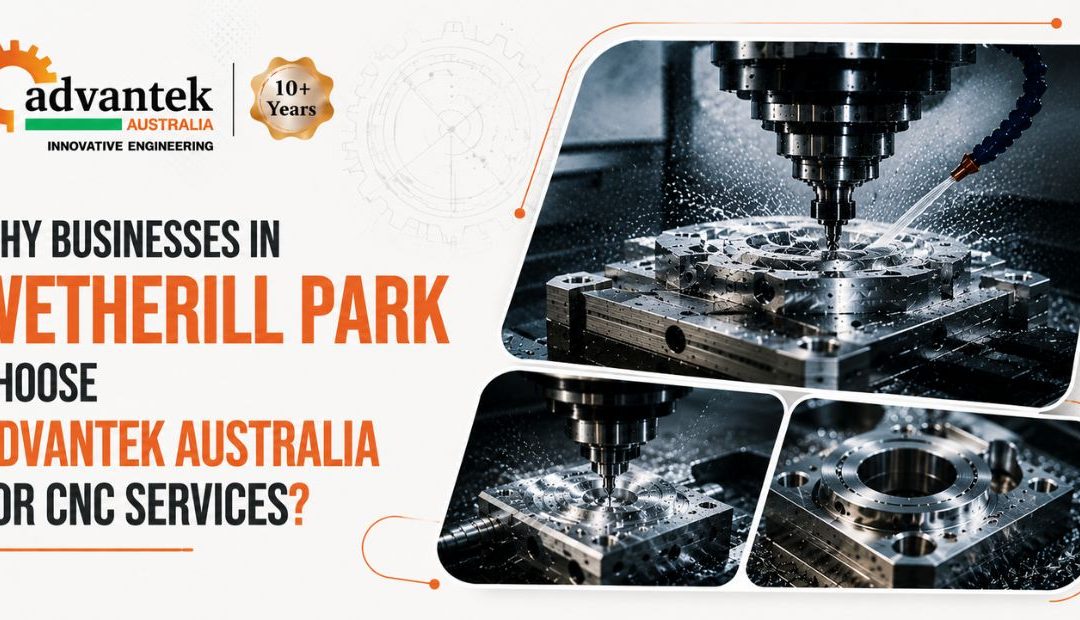
If you need someone to do CNC machining for you, Advantek Australia should be your first choice. This company, which is 100% Australian and located in the industrial zone of Wetherill Park, Sydney, has become a specialist in precision engineering solutions and has earned the praise of various industries like food, medical, defence, mining, agriculture, water and transport since 2008 when it started operations. 

The one-stop-shop concept for plastic and metal engineering at Advantek Australia is one of the main factors that contribute to the company’s distinction. Their first-class plant consists of modern CNC-operated lathes and milling machines attached to the most advanced CAD/CAM software, which ensures precision and accuracy for each project. Whether you are looking for a single prototype or large production runs, the skilled team of certified engineers at Advantek Australia will come up with an innovative, economical solution that is especially for your needs. 

Advantek Australia has an impressive list of capabilities that encompasses various aspects of modern technology—among them are CNC machining, CNC routing, water jet cutting, laser cutting, fabrication, 3D scanning and printing, welding, and reverse engineering. The wide-ranging skills allow them to manufacture parts from the very easiest to the very hardest, both in plastic and metal. They are certified according to the ISO 9001:2015 standard, which is a clear indication of their quality policy; their rigour, however, is also very much professional and focused on the excellence that results in quick turnarounds, a friendly atmosphere, and prices that are competitive. 

At every stage of the process—from the initial idea to the prototype and the finished product to the on-duty consultant—Advantek Australia offers comprehensive manufacturing solutions in one location. The wide variety of engineering plastics they have available as stock shapes (which includes HDPE and even the very best high-performance varieties) guarantees that the project can be completed quickly without compromising on quality. 

Conclusion: Transform Your Manufacturing with CNC Technology 

The benefits that CNC machining provides to industrial manufacturing in Australia are obvious and convincing. CNC technology allows for a strategic investment that transcends every aspect of operations, from unmatched precision and efficiency through cost savings and design flexibility. It is advantageous to team up with a CNC machining provider possessing a wealth of experience as Australian industries, which never cease to change, grow, and compete worldwide, are no longer just competing— they are already in the global market. 

Are you prepared to witness the transformative impact that precision CNC machining can have on your company? Contact Advantek Australia today and see how their all-inclusive engineering solutions can upgrade your manufacturing capacities. 

Now contact us: 

  • Phone: +61 2 9604 8772 
  • Mobile: +61 423 706 357 
  • Email: sa***@*******************om.au 
  • Place: 3/80 Hassall Street, Wetherill Park NSW 2164 

Beating the competition is not possible with traditional methods of manufacturing. Hire Advantek Australia’s experts and get your business ready for the next era of precision, efficiency, and profitability. You might be requesting one prototype or ongoing production support, they have the know-how, tools and the excellence commitment to realise your concept. Communicate with us now or send an email today to talk about your CNC machining needs and get a competitive quote! 

What Is CNC Machining? A Complete Guide for Australian Manufacturers

What Is CNC Machining? A Complete Guide for Australian Manufacturers

What Is CNC Machining? A Complete Guide for Australian Manufacturers

Australia’s manufacturing sector is all about precision and efficiency. If you are making parts for the food processing industry, then your manufacturing technology will help you win over the competition or lose it. In this context, CNC machining is the technology that has completely changed the way precision parts are made in Australia. The new method provides that very same level of accuracy and repeatability but with different techniques. 

Understanding CNC Machining: The Basics 

CNC machining, which stands for Computer Numerical Control machining, is an automated process of manufacturing that controls the movement of factory tools and machines by the pre-programmed computer software. CNC machining Sydney works differently than conventional manual machining, where the workers manually controlled the machine tools using levers and wheels, that is, it relies on digital instructions to perform highly complex cutting, milling, and turning operations with laser like precision. 

The whole process is initiated by creating a digital design using Computer-Aided Design (CAD) software. The next step is to convert this design into a language that CNC machines can comprehend, and this is done through Computer-Aided Manufacturing (CAM) software. The outcome of this conversion process is a smooth transfer of the digital blueprint to the physical component without the risk of human error, and consistency in the case of production runs, whether one single prototype or thousands of identical parts are being manufactured. 

The Technology Behind Precision Machining 

The modern precision machining industry is characterised by the use of exceptional technologies. CNC milling machines operated with rotating cutting tools to remove material and thus fashion very complicated and detailed shapes and features. For example, CNC turning centres rotate the workpiece and use stationary cutting tools to give it the desired shape, thus, allowing easy production of cylindrical components. The CNC routers are mainly for production purposes of soft materials like plastics and composites, whereas the multi-axis machines are capable of cutting the workpiece from every direction and hence can produce geometries that were either impossible or highly costly to make before. 

The remarkable precision of CNC technology is really outstanding. Tolerances as small as a few microns—that is, less than the diameter of a human hair—are commonly obtained. Such a high degree of accuracy is necessary for the sectors where even a slight deviation can lead to problems with the product’s functionality, safety, or compliance with strict Australian standards. 

The materials that come alive with CNC machining 

The versatility of the materials is one of the most captivating benefits of CNC services Sydney and all over Australia. High-density polyethylene (HDPE) and other advanced engineering polymers can be machined to great precision for water treatment plants, mining, and agricultural equipment. Also, the non-ferrous and ferrous metals like aluminium, stainless steel, brass, and titanium are machined into parts for defence, medical and transport industries that are very critical. 

Different materials are used according to the application’s specific needs—mechanical properties, chemical resistance, temperature tolerance, and regulatory compliance are some of the factors that have a significant influence. Manufacturers in Australia have the advantage of working with specialised machining facilities that are knowledgeable about the diverse materials and can provide recommendations on the best choice for each project. 

Applications Across Australian Industries 

CNC machining has established itself as a necessity universally throughout the industrial arena of the whole of Australia. In the processing of food, precision machining of components made of food-grade plastics plays a significant role in ensuring hygiene and reliability. The medical field depends on the exacting CNC services in Sydney for surgical instruments and implantable devices, where precision is literally a matter of life and death. Military contractors use CNC machining in Australia for parts that must go through very strict military specification checks.  

Mining activities that are the mainstay of the Australian economy employ the use of precision-machined parts that are designed to cope with extreme temperatures and constant wear. The manufacturers of agricultural machinery take advantage of CNC technology for the production of durable and reliable components that push the productivity of the farming sector in Australia. The water treatment facilities all over the nation rely on the availability of perfectly machined plastic and metal parts that can resist corrosion and last for decades of service. 

The Advantages of Modern CNC Machining 

CNC machining is a technology that has numerous positive aspects, the main one being precision. If a production run consists of various parts, then repeatability will guarantee that all parts meet the same specifications, which is crucial for quality assurance and regulatory compliance. Moreover, the technology has allowed for a great deal of efficiency, as machines are able to work night and day with very little supervision, which leads to labour cost savings as well as shorter production timelines. 

One of the main challenges posed by traditional machining methods was solving the problem of complex geometries; however, this is no longer the case with CNC technology. The use of multi-axis machines means that very complicated internal channels, compound angles, and organic shapes can all be produced at once, done in one go, which eliminates the necessity for running several operations and thus reduces the chance of making mistakes. 

Along with this, the optimised tool paths and precise cutting strategies that are used in CNC machining result in decreased material waste, which in turn produces cost savings and, at the same time, brings about environmental relief. Another area where the digital aspect of CNC machining comes into play is rapid prototyping—wherein the time taken to go from designing a part to making it is really short, thereby speeding up the product development cycle and allowing manufacturers in Australia to compete effectively in the global market. 

Why Choose Advantek Australia for All Your CNC Machining Requirements? 

Advantek Australia is one of the most trustworthy companies to work with when it comes to precision machining in Sydney and the rest of Australia. Such companies usually belong to different industries but Advantek Australia being an Australian-owned company, is strategically located at the industrial hub of Wetherill Park and therefore, has a wealth of expertise gained over several decades in plastic and metal engineering solutions. 

One of the main distinguishing factors is that Advantek operates in a way that the customer always gets a 100% surrender. The customer doesn’t have to deal with different suppliers anymore; he/she gets a full manufacturing solution within the same facility. The impressive range of capability available includes CNC milling, turning, and routing; every other method of cutting; water-jet cutting, laser cutting, forming, and even 3D scanning and printing. This kind of integration guarantees uniformity, quickness of the whole process, and ease of managing the project. 

Advantek is very flexible in their manufacturing and can handle any scaling of projects, whether it is a one-off prototype that is intended to visualise your ideas, a small batch production, or a very large and precise manufacturing. The engineering team is always in close contact with the clients and provides design and modelling services that turn the ideas into products that can be made, while sometimes also giving advice which improves the performance and saves in manufacturing cost. 

The company’s capability in developing with engineering plastics is very impressive. They have the full range of materials from HDPE to top performance polymers and can do the cutting, grinding and drilling on the lot, knowing intimately the properties and the exact requirements of each one. This specialisation, along with the metal fabrication capabilities, gives them a superb qualification to resort to cross-material and cross-technology solutions for complex projects. 

Advantek is really strong in the medical, food, and semiconductors industries. Moreover, they also cover the applications in the defence, mining, agriculture, water treatment, and transport sectors, thus showing their adaptability and great understanding of different regulations and performance requirements. The company’s dedication to pioneering engineering solutions has won them a hard-to-get reputation for being able to deal with manufacturing problems that others might refuse due to their complexity. 

Making the Right Choice for Your Manufacturing Needs  

One of the most important business decisions is to choose a suitable CNC machining partner. Furthermore, to consider the technical capabilities, factors such as responsiveness, engineering support, quality systems and industry experience should also be taken into account. Local manufacturers in Australia reap the benefits of the collaboration with local companies that are well aware of domestic standards, are able to respond promptly to critical needs, and are able to provide support for face-to-face meetings when the project is complex and requires it. 

Manufacturing technology is still changing and evolving, the integration of automation, artificial intelligence, and additive manufacturing is one of the main reasons the partnering with a forward-thinking provider of CNC services in Sydney will make sure that your manufacturing capabilities will not fall behind innovation. 

Revolutionise Your Manufacturing Capabilities Today 

The CNC machining Australia has changed the local manufacturing industry by bringing in the qualities of precision, efficiency, and innovation that keep the Australian businesses competitive internationally. Precision machining partner makes all the difference whether you are introducing a new product, improving existing manufacturing processes, or dealing with complicated engineering challenges. 

To put it another way, don’t permit manufacturing constraints to be an obstacle to your vision. Get in touch with Advantek Australia right now to speak about your project needs with their knowledgeable staff. Reveal the ways in which their all-inclusive CNC services and years of engineering know-how can turn your ideas into perfect reality by calling +61 2 9604 8772 or sending an email to sa***@*******************om.au. Advantek Australia, through the whole manufacturing process from the very first design consultation to the final production, is up to delivering the quality, precision, and reliability that your Australian manufacturing operation requires. 


With the right manufacturing partner, your next breakthrough product begins—so don’t hesitate and make that call today! 

Benefits of CNC Routing in Architectural & Interior Design Projects

Benefits of CNC Routing in Architectural & Interior Design Projects

Benefits of CNC Routing in Architectural & Interior Design Projects

Australia’s architectural and interior design scenario is witnessing a major change, and the credit goes to precision technology which, as it were, converts innovative ideas into real masterpieces. One of the major factors contributing to this change is CNC routing technology—a very advanced manufacturing process that is changing the way designers, architects, and builders handle complicated projects. If you are imagining a modern house in Sydney or if you are working on the interiors of a commercial building throughout Australia, then knowing the benefits of CNC routing in architecture can really improve your project outcomes.  

What is CNC Routing, and Why Does It Matter? 

The Computer Numerical Control (CNC) routing technology is the point where the digital design meets precision manufacturing. This cutting-edge technology is utilising computer-controlled cutting tools for the purpose of turning raw materials into complex architectural parts with very high accuracy. CNC routing, as compared to traditional fabrication methods that depend on and are thus limited to manual skills, and which are also prone to human errors, offers modern design projects with consistent, repeatable results that totally meet the standards of the day.  

To architects and interior designers, this technology is a source of unprecedented creative possibilities. Not only are complex geometric patterns, but also intricate decorative panels, and custom architectural features that were once prohibitively expensive or technically challenging are now achievable with remarkable efficiency. 

Precision That Brings Design Visions to Life 

One of the major advantages of technology in the field of architectural and interior design is its ability to make the creative idea come to life without any deviation. The precision of CNC routing technology is to such an extent that the millimetres are even being divided to get the perfect match of the digital specifications for every curve, angle, and cutout. The accuracy of this technology is particularly important for the following projects: 

  • Custom decorative screens and room dividers 
  • Intricate facade panels and cladding systems 
  • Bespoke furniture components with complex joinery 
  • Architectural trim and mouldings with detailed profiles 
  • Signage and way finding elements with precise lettering 

With the CNC routing method, the quality of the individual pieces is simply outstanding, all the way from the manufacturers’ prototypes to the hundred identical panels. This elimination of quality variations does bring about the same gradual installation and a more delicate final appearance that are common in manual processes. 

Diverse Material Options for Every Design Aesthetic 

One of the main features of CNC routing that makes it attractive for architecture is the fact that it can be applied to many different materials. Today’s CNC machines can cut and shape a wide variety of substrates, which gives the designers the opportunity to choose the materials that will not only be the most beautiful, but also the most functional and economical that are the closest match to their original concepts.  

Engineered Plastics: High-density polyethylene (HDPE), acrylic, and polycarbonate, to name a few, have the advantage of being incredibly long-lasting, as well as being very flexible in terms of design and able to withstand even the toughest weather conditions. They are thus suitable for both indoor and outdoor applications, where the materials need to have a long-life span. 

Timber and Composite Materials: The spectrum of materials with CNC routing extends from premium natural hardwoods over to environmentally friendly MDF and plywood. The machine cutting brings in more of the natural warmth and beauty of the timber to the spaces with the precisely cut timber actors. The technology can perform delicate lattice work, detailed engravings, and complex joints, all to the extent that it is possible to see the beauty of the wood grain. 

Metal Substrates: Metals such as aluminium, brass, and even steel can be routed with precision to bring out the hidden contemporary aspects. A modern-day design using perforated metal screens for walls or decorative wall panels that impart an industrial character to the interiors can be easily made out of brass, for example. 

Speciality Materials: CNC processing capability has made it possible to handle advanced composites, solid surface materials, and even stone, thereby creating powerful design statements with custom interior CNC panels that are very much attractive and creative. The flexibility of materials gives the designers the power to play around with textures, finishes, and combinations that create unique spatial experiences. 

Scalability from Concept to Completion 

The journey of every architectural project from the initial concept to the final installation is different. The CNC routing technology keeps supporting this whole journey with great scalability. It does not matter whether you are making one sample for client approval or producing hundreds of panels for a small-scale commercial fit-out, CNC routing can easily change according to the specific needs of your project.  

Prototyping and Iteration: CNC routing is a rapid prototyping tool for architectural elements during the design development phase. Physical samples can be quickly made by designers, assessed in context, modified, and new versions made again—all this without incurring significant time or cost penalties. 

Small Batch Production: For projects in the boutique sphere or custom residential designs that need just a few pieces of customised parts, CNC routing gives the chance of a cost-effective small batch production without losing high quality and precision. 

Large-Scale Manufacturing: If the project requires a lot of identical pieces, like hundreds of decorative panels for a hotel lobby or office, then CNC routing will ensure that all pieces have the same quality and it would still be producing under good timelines. 

This flexibility of production levels is especially beneficial for the Australian market, where projects can be from small residential renovations to large commercial developments, having different requirements for production. 

Accelerated Timelines Without Quality Compromise

Project timelines in the competitive construction and design industry directly impact profitability and client satisfaction. Compared to traditional fabrication methods, CNC routing contributes to the manufacturing process speed significantly while still maintaining the quality that sets apart incredible architectural work. 

Installation of automated CNC systems requires minimal supervision as they work non-stop, which leads to a drastic reduction in production time for complicated parts. CNC machine taking highly skilled manual labour that might take days or weeks have often done in hours. This leads to project completion time being shorter and labour cost being lower, as well as strict construction deadlines being met. Also, precision of CNC routing saves materials as well as time not having to do corrections or remakes because of fabrication errors which are common in manual production. 

Additionally, the accuracy of CNC routing helps to save on materials and avoids spending time on corrections or remakes where there have been fabrication errors, which are often the case with manual production. The same efficiency applies to the installation phase, where components made with the utmost precision fit perfectly into each other and save time for adjustments on the site. 

Cost-Effectiveness Through Manufacturing Efficiency

The cost of investing in custom architectural elements may be high, but the exceptional value of CNC routing is through the efficiency of the manufacturing process. The precision of the technology leads to material being wasted, as the cutting paths are optimised to give the maximum yield from each sheet or board. This efficiency is of great importance when using premium materials where waste is a direct impact on project budgets. 

The reduction in labour cost is another major benefit. CNC routing takes over the cutting and shaping processes that are complex and would require highly skilled craftsmen working for long periods of time. This automation, however, does not mean that the need for skill and expertise is completely eliminated—it is just the area that the expert skills will be directed toward will be design optimisation, quality control, and finishing work that adds maximum value. 

In the case of projects that need repetition—identical panels, recurring pattern elements, or standardised architectural features—the cost per unit becomes much lower with CNC production as compared to handcrafted techniques. Therefore, the sophisticated design elements will be available to a larger variety of projects and budgets. 
 

Environmental Sustainability in Design Manufacturing 

Sustainability considerations increasingly influence material selection and manufacturing processes in Australian architecture and design. CNC routing contributes positively to environmental goals through several mechanisms. 

CNC cutting’s accuracy effectively limits the waste of materials by applying cutting paths and nesting patterns that extract the most usable pieces from the raw materials. In contrast to methods that leave large amounts of offcuts or need bigger raw pieces to compensate for manual cutting tolerances, CNC routing is a material-friendly process. 

The majority of the engineering plastics commonly employed in CNC routing are of recyclable type or composed of recycled (post-consumer) material, thus they comply with the idea of circular economy. In addition, the possibility of selecting strong, long-lasting materials for the CNC-manufactured construction parts not only reduces the number of replacements but also leads to a smaller total environmental impact during the building’s life cycle. 

Why Choose Advantek Australia for All Your CNC Routing Requirements 

When it comes to making architectural dreams come true with exact manufacturing, Advantek Australia is the CNC routing partner of choice for Sydney. Our Australian-owned factory located in Wetherill Park mixes state-of-the-art technology with a high level of engineering expertise to provide excellent results for architects, interior designers, and builders all over the country.  

Comprehensive In-House Capabilities: Our high-tech manufacturing factory provides complete solutions from A to Z, including initial design, CAD modelling, CNC routing, finishing, and quality assurance all in one place. This integrated system offers the advantage of a single point of control over the quality, communication, and timeline of the project.  

Material Expertise: Depending on your needs, we would recommend the suitable material that will give you the best performance, aesthetics, and budget. Our considerable stock of engineering plastic grades means no waiting for material sourcing when we start your project. 

Scalable Production: No matter if your project demands just one prototype, small batch production, or massive volume manufacturing, our versatile production capabilities can handle any project size while still maintaining the same high level of quality and precision.  

Collaborative Design Support: From concept to completion, our team partners with designers and architects closely. We provide design optimisation suggestions that not only enhance manufacturability but also keep the creative intent, thus guaranteeing that your vision is perfectly translated from the digital model to the tangible reality. 

ISO 9001:2015 Certification: The quality assurance is through the ISO 9001:2015 certification, which is our formal commitment to quality, and it indicates that we have a set of processes in place that are systematic and deliver consistent, dependable results for each project.  

Proven Track Record: In the past, we have delivered manufacturing solutions to various industries like food processing and medical and even to defence and transport. This wide experience is one of the factors that enable us to adopt the right approach to architectural projects by sharing insights from the different sectors of the industry to overcome the unique challenges presented by the design. 

Conclusion: Transform Your Design Vision with Precision CNC Routing 

CNC routing is not only a means of doing things simple, it has numerous advantages which by the way the process is not limited to manufacturing. The technology has opened new avenues in the way the designers think about the realisation of their ideas inspired by the characteristics of CNC routing which are, precision, material versatility, scalability, and most importantly cost-effectiveness. In fact, these very characteristics make it possible for the truly impressive architectural dreams to be turned into reality. 

As the Australian architecture is taking another step towards more complex and unique design solutions, it becomes imperative to cooperate with a manufacturing expert who has a firm grasp of the entire process—the capabilities of CNC routing as well as the demands of the architectural project in terms of creativity. 

Do you want to take your next architectural or interior design project up a notch by using a precise CNC routing technique? The Advantek Australia team is ready to make your artistic ideas an extraordinary reality. Please get in touch with us right away to talk about your project needs, look into the different materials, and find out how our cutting-edge CNC routing can achieve your vision quality-wise without compromise. 

Contact us right away: 

  • Phone: +61 2 9604 8772
  •  Mobile: +61 423 706 357
  • Location: 3/80 Hassall Street, Wetherill Park NSW 2164 

We are excited to collaborate with you to envision and build a masterful union of precise manufacturing and inspired design.

From Concept to Component: How Advantek Delivers Smart Engineering Solutions

From Concept to Component: How Advantek Delivers Smart Engineering Solutions

From Concept to Component: How Advantek Delivers Smart Engineering Solutions

Imagine this scenario: you have an exceptional idea that you have either drawn on a napkin or that you already have in a CAD design, and you wish to turn it into a product. The difficult task now is how to bring about that change from a digital design or rough concept to a working, precision-engineered part? Where to begin, after all? 

Should these inquiries have come up in your head before, then know that you are not the only one to think that way. The gap between your thoughts and reality might be a formidable barrier that is not easy to overcome. Would you have to deal with multiple suppliers for each of the phases of the process, such as design, prototyping, and manufacturing? How is the product’s quality ensured if there are different vendors? What if all that you have is the part itself, and you need to recreate it without the original specs? 

This is where the journey gets a little better. Advantek Australia has become so skilled in handling these problems that they have already turned them into solutions that are hardly apparent. They have been the ultimate provider of wide-ranging engineering services across Australia and have formed a superb reputation for being able to do the impossible – producing high-quality, precision-engineered components that not only meet but also surpass the standards that the industry has set. And all of this is done in-house. 

Understanding the Engineering Journey 

The journey from an idea to an actual part is not usually easy and simple. For instance, if you are a new company with a revolutionary model or a company that needs high-quality reverse engineering, the process will still be the same – planning, technical skills and modern manufacturing equipment will be necessities. Here is where the comprehensive method of Advantek Australia becomes important and. 

The first step of every manufacturing project is to get the client’s idea. In Advantek’s Wetherill Park facility, which is in Sydney, the team is always available to help their clients in every step of the way while at the same time developing their concepts into engineering solutions. This cooperation guarantees that any technical specification, functional requirement as well as design limitation is thoughtfully taken into account before any manufacturing steps are taken. 

The Advantek Engineering Process: A Complete Manufacturing Solution 

Stage 1: Concept Development and Design 

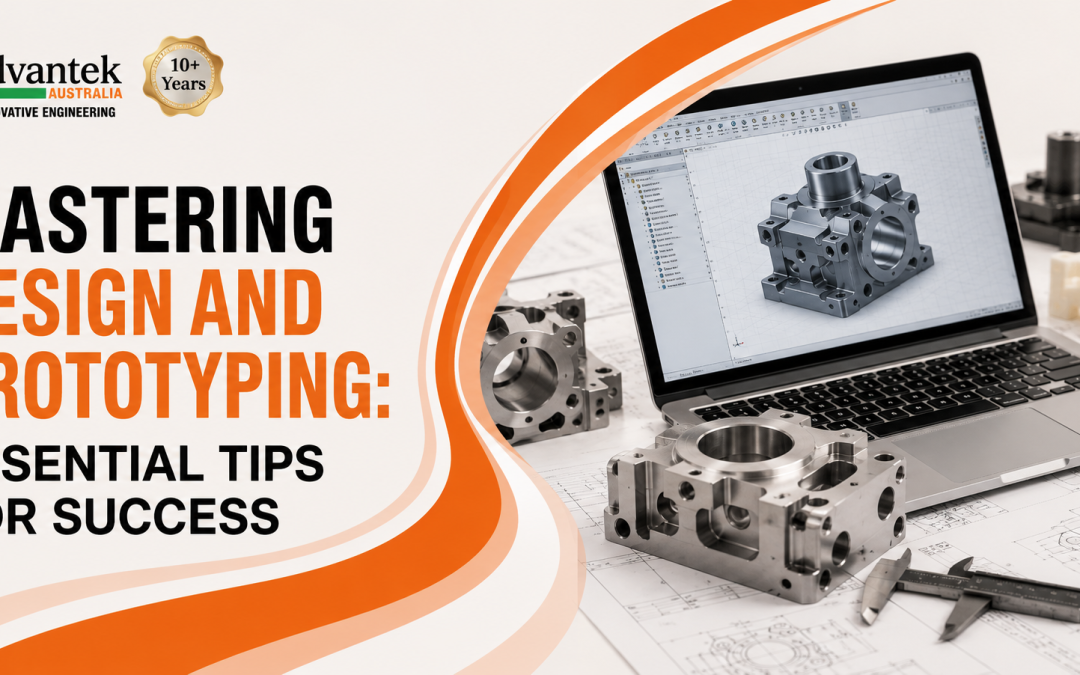
The start of the journey is typically no more than an idea or a rough sketch. The talented engineers at Advantek have the ability to transform these basic concepts into detailed and ready-for-production designs. The design group makes use of cutting-edge CAD/CAM software to create extremely precise 3D models that display all dimensions, tolerances, and functional requirements. 

Advantek has a tool for customers that have CAD files in hand already that transforms CAD to product, which facilitates the journey from digital design to physical component considerably. The engineering team evaluates these files with the purpose of discovering more manufacturable, and they are ready to recommend alterations that might result in the production process being quicker, cheaper, or even better, provided that the principal design concept originally intended is not compromised. 

Stage 2: Prototyping and Testing 

Prototyping is an essential process in validating designs and determining possible improvements before going for full-scale production. The prototyping services of Advantek enable customers to have and examine three-dimensional models of their designs, thereby ensuring that the features, size, and performance match the requirements.  

This phase is especially important for intricate parts where the designs need to be tested in the actual environment. The group can either create one prototype or produce a few pieces, thus enabling further development through feedback and interacting with the market, before going for higher production levels. Such a manner of working insights dramatically decreases the chance of making very expensive mistakes and at the same time guarantees that the ultimate product is going to function just as it was planned. 

Stage 3: Reverse Engineering Solutions 

Not every project comes with a CAD file or proper drawings at the very beginning. In some cases, clients have to duplicate, upgrade or replace existing parts with no access to the original design details. Advantek’s reverse engineering services are the perfect solution in such scenarios.  

The team employing state-of-the-art 3D scanning technology can acquire the exact shape of the current components and thus make very good digital prototypes that will eventually be used for the manufacturing process. This technology is a great asset for businesses that need to work with outdated machines, old systems or situations where the original manufacturers are not available anymore.  

The reverse engineering process is not limited to plain duplication. The engineers at Advantek can scrutinise the current designs, discover the projects that can be improved and then produce the upgraded versions with the said better properties of performance, longer life or cheaper production costs. This added value method is what turns reverse engineering from a solution of the hour into a business strategy. 

Stage 4: End-to-End Manufacturing 

Once the designs are finalised and the prototypes are approved, Advantek’s comprehensive manufacturing capabilities are fully employed. The technology used at the factory is fantastic, even considering CNC milling and turning centres, CNC routing, water jet cutting, and laser cutting. All this different technology makes it possible to manufacture parts from both plastic and metal materials. 

The complete production method means that the clients deal with one partner for the whole manufacturing process. You do not have to coordinate with multiple vendors or manage complex logistics. Advantek handles the entire process, from sourcing of raw materials to final quality inspection, thereby guaranteeing consistency, quality, and accountability throughout the process. 

Stage 5: Quality Assurance and Delivery 

Quality control is not at Advantek simply a post-processed but rather an essential part of the complete production. Every single component is checked with high precision measuring devices and inspected thoroughly to make sure the functional specifications are met. 

Advantek can handle the whole range of production, from one-off custom parts to large quantity manufacturing runs for customers wanting continuous production. This flexibility sets them up as a perfect ally for companies in every stage of growth, from new ones experimenting in the market to big ones increasing their output. 

Industries Served and Applications 

Advantek’s engineering services in Australia span a remarkable range of industries, each with unique requirements and challenges. Food processing plants depend on the machine parts and hygienic processing equipment made to their specifications by the skilled workers. The makers of medical devices rely on Advantek for the supply of precision parts that comply with very strict regulations. The military suppliers appreciate the fact that their orders are kept secret and that they will receive the components made according to the specified requirements. Defence contractors value their ability to produce components to exact specifications with complete confidentiality. 

Mining companies depend on Advantek for durable components that withstand harsh operating conditions. Agricultural equipment manufacturers appreciate their understanding of seasonal demands and their ability to scale production accordingly. Water treatment facilities, transport companies, and countless other industries have discovered that Advantek’s comprehensive capabilities provide solutions to their most challenging engineering problems. 

Materials Expertise: Plastics and Metals 

A significant factor in the competitive advantage of Advantek’s services is the company’s comprehensive know-how in engineering plastics. The team handling different plastic materials is familiar with their properties during machining and in service, ranging from high-density polyethylene (HDPE) to super high-performance polymers. Material selection based on this understanding guarantees that the requirements specified for the product’s function, the environment where it is going to be used, and the budget are all considered. 

The company has a well-stocked plastic stock shape inventory that features engineering plastics in almost any form such as profiles, rods, sheets, and tubes. Being able to have such an extensive inventory means that many projects can be started right away without delay due to waiting for the material to be procured. In the case of metal parts, the machining expertise of Advantek means that the fabrication will be done to the highest precision no matter how complex the material is. 

Advanced Technologies and Capabilities 

Being at the top of the manufacturing technology is very important in the today’s competitive environment. Advantek keeps on investing in the latest equipment and training in order to have the same capabilities as the industry. 

Water jet cutting technology is the most efficient in cutting materials precisely without creating heat-affected zones, which is a big plus for plastics and materials that cannot stand thermal stress. CNC milling and turning machines deliver the necessary accuracy for parts with strict tolerances and elaborate shapes. Laser cutting is both fast and accurate with sheet materials, while manufacturing options make it possible to put together tricky structures from single parts. 

The adoption of 3D printing technology goes hand in hand with traditional manufacturing techniques, thus facilitating quick prototyping and the creation of intricate shapes that would be very difficult if not impossible with conventional machining. This mix of technologies means Advantek can choose the best production process for each individual application. 

Why Choose Advantek Australia for All Your Engineering Requirements 

Choosing the appropriate engineering partner may determine the outcome of the project -success or frustration-. In the Asia Pacific region, Advantek Australia has asserted its position with compelling advantages that consist of the best engineering services in Australia.  

Comprehensive In-House Capabilities 

The most notable advantage of working with Advantek is manufacturing capability in-house. Clients don’t have to deal with different suppliers for design, prototyping, and production; rather, they get a seamless transition through all the project stages. This merging removes communication problems, cuts the complete time of the project, and gives the project results a single point of accountability. 

Local Expertise with National Reach 

Being an Australian-owned company located in the center of Sydney’s industry, Advantek has the advantages of local presence and the capacity to cater to clients across the entire country. The closeness allows for design collaboration, prototype testing, and technical consultation to be conducted in whole; in this way they are more effective when done face to face. However, their ability is not limited by their location, as they have shipping and logistics solutions that can deliver parts wherever they are needed efficiently. 

Flexibility Across Project Scales 

Advantek’s flexible manufacturing technique accommodates projects of any size, whether you require a single prototype or production units in thousands. Such flexibility is especially important for companies that are in the process of growing, enabling them to start with small prototype development and then smoothly transition to large production without having to change partners or re-establish relationships. 

Technical Expertise and Problem-Solving 

Advantek’s technical team has been involved with numerous projects over the years, bringing a total of decades of combined experience. This knowledge helps in proactive problem-solving that even takes care of the challenges before they turn into expensive issues. Their involvement is very beneficial; they not only participate in the clarification of the specs, but also contribute by suggesting design changes to make the project easier to manufacture and materials that are more efficient to use. 

Quality Without Compromise 

In precision engineering, quality is an absolute requirement. Advantek’s policy of quality control guarantees that all parts being shipped from their factory are up to par with the specified standards. Their persistence in maintaining high standards has led them to become the preferred suppliers in the so-called ‘high risk’ areas, where the failure of components is not only a matter of being costly, it can also be life-threatening. 

Innovation and Continuous Improvement 

The world of manufacturing does not stand still; it is constantly changing with the introduction of new materials, technologies, and methods. With this policy, Advantek can assure its clients that they will be the first to benefit from the latest manufacturing technology. Being a company that is always looking ahead, Advantek’s implementation of modern machining practices and upgrading of measurement systems always put their clients ahead of their competitors in the market.  

The Strategic Value of Integrated Engineering Services 

Apart from the quality parts and the trustworthy delivery that are the immediate benefits of an integrated engineering partner like Advantek, there are also during their cooperation additional advantages of the business that will influence the success of the company in the long run. 

Cost efficiency is a result of the lack of markups between several suppliers and the cutting down of project management overhead. When designed, prototyping and manufacturing take place in one location, communication is quick and easy, thus the chance of misunderstandings and consequently expensive corrections is very little. 

The time needed to bring a product to market is reduced when all the stages of the project flow from one to the other without any interruption. In those industries where being the first to launch a product can decide the success or failure of the company, the integrated approach of Advantek provides a considerable advantage. 

When there is a single reliable partner, it is much easier to protect the intellectual property rights than when sensitive designs are concurrently shared between multiple suppliers. One thing that Advantek is aware of is that confidentiality has value, and so the company takes the necessary measures to keep the clients’ innovations safe. 

Looking Forward: Innovation in Manufacturing 

Gradually, the future of manufacturing is going to be more personalised, quicker in delivery, and digitised by merging the conventional manufacturing processes with the modern ones. Advantek Australia is not only ready for this future but also has the ability to manage the whole spectrum from traditional machining to the most advanced 3D scanning and printing.  

With the changing of times, new difficulties arising, the demand for jigsaw puzzle engineering partners that can easily move from one area to another grows. To be among the first to have the new products, be fully compliant with the regulations, and have the best designs in the market, a company like Advantek having such capabilities at its disposal would be a solid ground for continuous success. 

Conclusion: Partner with Precision, Deliver with Confidence 

The road from idea to part takes more than just manufacturing skills. It is a matter of cross-functional cooperation, technical know-how, and a sacrifice of resources to get quality at every step of the way. The entire journey is covered by Advantek Australia, which turns the ideas and designs into precision-engineered parts of different industries that are winning their battles through the success of the business. 

They provide throughout Australia full engineering services, advanced reverse engineering, effortless CAD to product workflows, and true end-to-end manufacturing capabilities. However, Advantek is still very much ready to undertake your most difficult engineering projects. From a discussion about the initial concept to the delivery of precision parts finished; their team always brings technical expertise, manufacturing excellence, and problem-solving skills that go together to every project. 

Turn your idea into reality at last! Complicated engineering issues do not need to be an impediment to your project. Reach out to Advantek Australia and get to know how their unified engineering and manufacturing approach can speed up the success of your project. 

You can either call +61 2 9604 8772 or email sa***@*******************om.au to have their skilled team talk about your engineering needs. Come over to their Wetherill Park plant and take a look at their modern manufacturing technologies, or check out the entire range of their services at advantekaustralia.com.au. 


A chat is all it takes to get your precision engineering solution started. Just pick up the phone and call today to be part of the Advantek difference – where every project confidently, with quality, and Australian engineering excellence moves smoothly from concept to the component.