
Why Precision Matters: How CNC Machining Ensures Accuracy and Quality
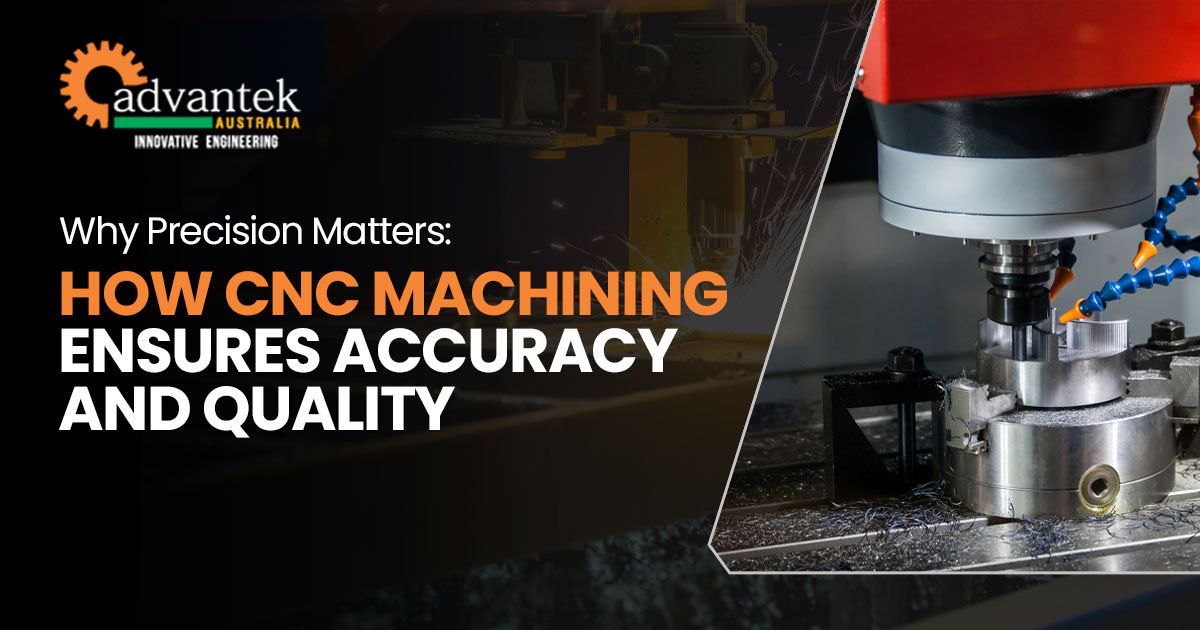
Have you ever questioned what distinguishes a part that works perfectly for many years from another one that goes wrong shortly? The solution often boils down to one word—precision. In sectors where tolerances are taken in microns, and quality cannot be compromised, precision CNC machining remains the gold standard of absolute manufacturing quality.
Defining Precision in Today’s Manufacturing
Precision is not merely being within the limits of specifications; rather, it is consistently obtaining exact measurements, part after part, day by day. In the sector of metal fabrication that businesses in Sydney rely on, precision CNC machining is seen as the channel for advanced technology, skilled labour, and strict quality control that are all working together.
Computer Numerical Control (CNC) machining has brought about the biggest change in manufacturing by eliminating human error. Traditional machining was very much dependent on the operator’s skill and manual adjustments, whereas CNC systems carry out programmed instructions with mathematical precision. This technology gives rise to accurate machining services that are capable of replicating complex geometries and maintaining tight tolerances across production runs of any size.
The Technology Behind Precision CNC Machining
Contemporary CNC machines function by means of highly sophisticated multi-axis systems that can accurately position cutting tools within a thousandth of a millimetre. Servo motors, linear encoders, and high-tech feedback systems are the main components of these computers that monitor cutting, and positioning is done by adjusting it instantly. This level of precision will be very difficult to reach if the whole operation is done manually.
The accuracy starts with computer-aided design (CAD) and computer-aided manufacturing (CAM) software. The engineers make intricate 3D models illustrating every dimension, tolerance, and surface finish requirement. The digital blueprint is subsequently converted into machine code, which controls the CNC equipment’s accurate cuts, drilling, and contouring.
Temperature control is crucial for accuracy. The of the metal’s size will depend on its temperature, which might as a result alter the dimensions. Metal fabrication Sydney companies control the climates in their workshops and let the materials cool down before machining. Other high-tech operations even implement temperature compensation algorithms that modify tool paths in accordance with the found temperature discrepancies.
Why Accuracy Matters Across Sectors
In the field of aerospace, accuracy is not only important, but it is also necessary. The parts of the aircraft are supposed to be very precise, and the tolerances that they must meet are very tight, keeping in mind the performance and the safe journey at high altitudes. A turbine blade that has been manufactured incorrectly could cause a failure that would result in a tragedy. Therefore, precision machining services with quality control documentation and complete traceability are the standards set by aerospace manufacturers.
The medical industry is another one where the same precision is required. If surgical tools, implants, and diagnostic devices are made by using CNC machining, they will be safe and good for the purpose. An orthopaedic implant must get the specifications of the bone and be made accordingly to integrate with the bone challenging and soft tissues. Surgical tools need to follow the dimensions very closely to get the job done without causing damage.
To a certain extent, even less dramatically critical applications show precision in their direct benefits. Automotive parts made to very narrow specifications are more efficient, have longer life cycles, and generate less heat and friction. Inaccurate parts in industrial machinery lead to more downtime, higher repair costs, and a shorter operational life for the machine.
Quality Assurance in Precision Machining
To achieve precision, a complete quality assurance system is necessary alongside good equipment. Professional operations set up multiple checkpoints during the manufacturing process to verify the accuracy of the parts at every stage.
Usually, the process starts with the first article inspection, where the initial production part is measured in detail to ensure it meets all the specifications. Coordinate Measuring Machines (CMMs) touch many different spots on the component’s surface, and a detailed map is created that is compared with the CAD model. This way, any defects are detected and fixed before the regular production starts.
In-process inspection helps to deal with a problem before it spreads to a lot of parts. During machining, the operators have the precision measuring tools such as micrometers, height gauges, and optical comparators to check the critical dimensions. Also, the statistical process control (SPC) methods are there which follow the measurement data over a period and spot the trends which could point to the need for changing the tool due to wear or other parameters that are affecting accuracy.
Final inspection is the stage where the maximum assurance is given that the components conform to the specifications. Besides checking the dimensions, the inspectors also assess the surface finish, edge conditions and other quality characteristics. There are Documentation packages that go along with the finished parts, which give total traceability and proof of compliance with the requirements.
Material Selection and Precision Outcomes
The material properties and machining precision relationship is frequently underrated. Various metals have different reactions to cutting forces, heat generation, and tool pressure. Knowing these characteristics is crucial for getting the best results in projects involving metal fabrication Sydney.
Aluminium alloys are easy to machine and have excellent dimensional stability together, which makes them a first choice for precision parts. Nevertheless, there are different characteristics depending on the grade of aluminium. 6061 aluminium is very machinable and strong, meanwhile, 7075 gives higher strength but requires more careful machining parameters.
Stainless steel is a challenge because of its hardness and the fact that it is going to get harder the more you cut. The precision of stainless-steel machining depends on the right tooling, cutting speeds, and coolant application. The output, though, is a product with excellent resistance to corrosion and durability even under the most demanding applications.
Exotic materials such as titanium and Inconel require the expertise of a specialist in precision CNC machining. These materials are hard to machine but have the properties that would be very useful for the aerospace, medical, and high-performance applications. The work on such materials means knowing their behaviour under different machining conditions in order to precisely control the tool life and maintain accuracy.
The Human Element in Automated Precision
Nevertheless, precision CNC technology still requires skilled labour to be consistently done. Deep understanding of the factors that govern machining like process, material features, and tooling capabilities is a prerequisite for programming complex parts. Then, the experienced programmers work out the tool paths in such a way as to reduce the generation of vibrations, control the heat being made, and get the best possible surface finishes.
The machine operator is the one who takes care of production on his/her own by doing some slight changes in the process to keep accuracy throughout. He/she is able to tell when the wear of the tool starts to have an impact on the quality, and he/she will initiate the tool change before the tolerances are overrun. Their skill in the setup protocols makes sure that the work holding fixtures are positioned correctly and securely.
Quality controllers employ their trained eyes and measurement skills in the verification process. They are familiar with the correct ways of operating precision instruments and interpreting measurement results within the context. Their keen observation detects there might be problems before the products are shipped to the customers.
Investment in Precision: Long-Term Value
The companies that give priority to exact machining services consider precision as an investment and not as an expense. The cost of precision manufacturing could be higher at the start, but still, the long-term value proposition is very attractive.
Accurate parts fit the right way the first time, thus avoiding expensive rework and delaying assembly. They also have a long-service life and, therefore, fewer warranty claims and no damage to the company’s reputation. The quality that precision provides allows to produce faster and with fewer inspections done.
For businesses that outsource their manufacturing, selecting a precision-oriented metal fabrication Sydney partner brings in a number of strategic advantages. Access to state-of-the-art capabilities without having to invest in capital equipment, flexibility to manage changes in production volumes, and knowledge in making designs for manufacturability all play a part in the company’s competitive edge.
Precision CNC machining is not an alternative, but rather a necessity in an era where quality expectations are constantly increasing and tolerances are becoming tighter. The manufacturers that are able to achieve the highest accuracy on a consistent basis will be able to use their technology, processes, and know-how as a differentiator from those that just perform to a minimum standard.
At Advantek, precision is not only a capability but our very foundation. What we have done is to invest in state-of-the-art CNC machines, climate-controlled buildings, and total quality management systems to make sure every part meets the most demanding specifications. Our people of highly skilled machinists, programmers, and quality control experts with their several decades of combined knowledge and skills confer it upon every project.
Are you prepared to feel the impact of precision? Get in touch with Advantek Australia now to go over your precision CNC machining needs. Our precision and quality guarantees that your parts will work just as they were intended, no matter if you ask for prototypes, production runs, or sophisticated metal fabrication Sydney solutions. For further details about our services and to get a quote for your upcoming project, please visit advantekaustralia.com.au.